Online Training Deck
A focused 30-60 minute training flow for functional overview, on-premises license module selection, remote support SLA, and Dock solution configuration.
Training Scope
The flow follows the customer's requested agenda and adds a live configuration demonstration using the AERONEX Dock 3 tool.
Remote operations, live situational awareness, route planning, media/model workflows, OpenAPI, and FlightHub Sync.
Base package, device expansion, upgrade validity, online-device calculation, and a sample module selection case.
Remote technical channels, response targets, troubleshooting scope, and certified-dealer eligibility.
Open the configurator, select Dock quantity and subscription years, then generate a reference package structure.
Part 01 | Overview
DJI positions FlightHub 2 as a cloud-based drone operations management platform with remote control, intelligent flight scheduling, flight route management, and third-party integration. For on-premises customers, the same operational logic is deployed into a private environment.
Functional Overview
These are the customer-facing feature groups most relevant to partner teams: real-time command, collaborative awareness, automated workflows, and IT integration.
Operate supported aircraft remotely through the virtual cockpit, using mouse and keyboard workflows for precise camera and mission control.
Coordinate multiple drones through the virtual cockpit, including synchronized control and collaborative operational workflows.
Use intelligent algorithms for detection, counting, alerts, and continuous tracking of objects such as vehicles, boats, and people where supported.
Set a destination and let FlightHub 2 plan the route and guide the drone to the target location for faster response.
Overlay key geographic information on the live video feed to improve operator awareness in complex environments.
Apply AI-assisted recognition and alerting to improve inspection efficiency and turn live mission data into faster decisions.
Integration Story
FlightHub 2 can act as a platform layer, not only an operator screen. FlightHub Sync enables code-free file and event synchronization, while OpenAPI supports deeper integration with customer systems.
Dock or aircraft executes route, patrol, or response task.
Video, status, media files, models, routes, and annotations are generated.
Configure file sync, livestream forwarding, events, and notifications.
Use RESTful APIs for customized platform or system integration.
Connect to inspection, emergency, security, or asset-management workflow.
AI & Multimodal Intelligence
DJI's current FlightHub 2 positioning adds stronger AI capability to the command workflow: Copilot support, AI detection and alerts, multimodal object search, and multimodal media search for faster evidence review.
Operators describe objectives, and the AI agent translates the intent into drone instructions while keeping human confirmation in the loop.
Detect and count objects such as vehicles or boats, with room for third-party algorithms where supported.
Detection results can trigger alerts and keep records with object type, location, timestamp, and imagery for traceability.
Use text or image queries to locate matching objects across collected imagery and video data, accelerating report preparation.
Route Planning & Automated Workflows
Beyond basic route planning, DJI's official feature set now emphasizes specialized route types and chained automation for response, patrol, inspection, mapping, and periodic data workflows.
Data Analysis & Cloud Modeling
FlightHub 2's data workflow connects automatic upload, cloud modeling, analyzer tools, measurement reports, result comparison, and AI change detection to support mapping, construction, inspection, and project progress review.
2D/3D reconstruction, point cloud outputs, real-time 2D reconstruction where supported, and Modeling API integration.
Measure coordinates, elevation, length, area, volume, slope, cross-section, and profile, then generate reports.
Compare photos, panoramas, or orthomosaics side by side, with annotations synchronized to map context.
Detect changes between two top-down imagery sets or orthomosaics and generate statistical reports.
Safety, Compliance & Data Security
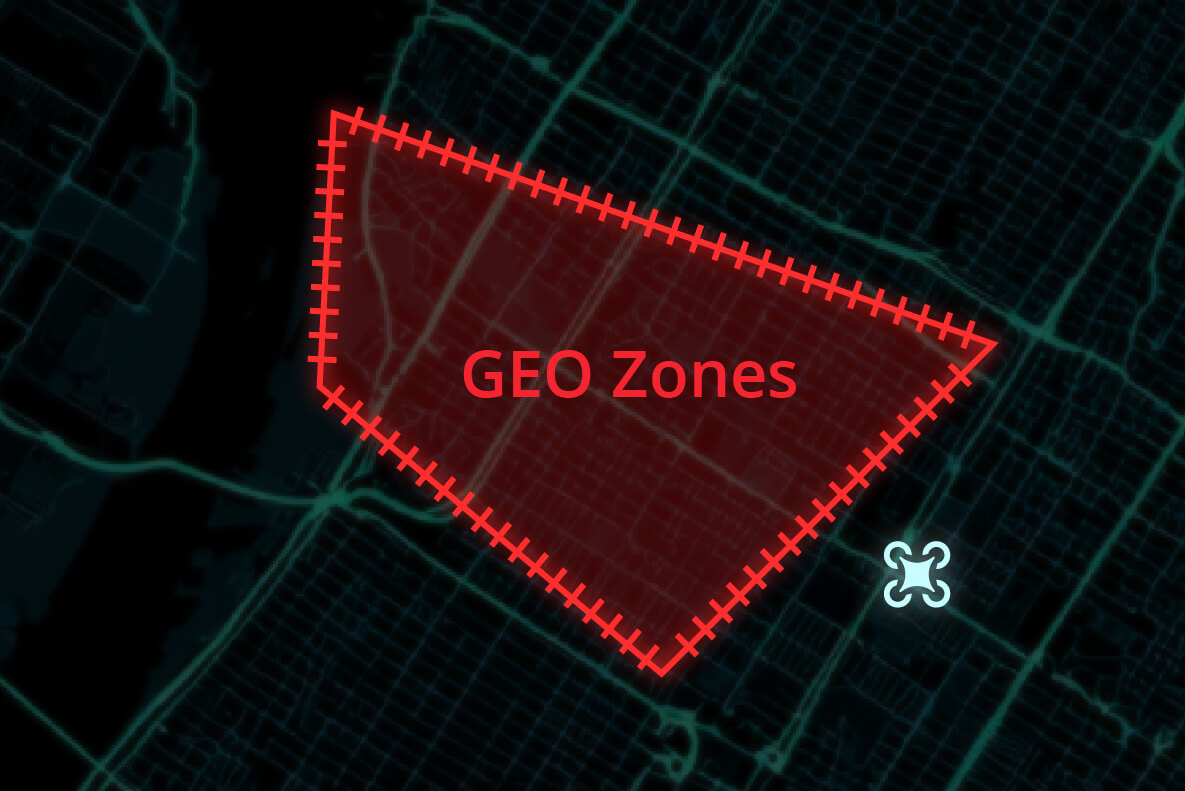
For enterprise and on-premises discussions, the key message is controlled operation: safety zones, project permissions, secure authentication, airspace awareness, localized compliance options, private deployment, and recognized security certifications.
DJI states that FlightHub 2 holds ISO 27001 and ISO 27701 certifications. For customer-facing material, use this as an official reference point and avoid adding unverified security claims.
Part 02 | On-Premises License
The on-premises version is designed for private intranet deployment. The official billing logic focuses on the number of devices that can be online simultaneously, not simply the total number of devices bound in the organization.
| Module | Planning Meaning | Training Message |
|---|---|---|
| Base Package | Mandatory first module, 1 online device, expandable. | Always start with one base package for the on-premises environment. |
| Device Expansion | +1 or +5 online devices. On-premises can be expanded up to 200 simultaneous online devices. | Calculate peak concurrent aircraft / Dock online demand, then add expansion modules. |
| Upgrade Validity | 1-year extension for software upgrade validity beyond the included first year. | Match upgrade validity to the customer's expected subscription / support period. |
| Included Capabilities | Unlimited livestream minutes, storage, and mapping images; single mapping task limited to 2,000 photos. | Resource consumption is not the bottleneck; online device capacity and upgrade validity drive configuration. |
License Example
Use this as the training exercise requested by the customer. The exact commercial SKU naming should be confirmed by the dealer quotation system, but the capacity logic is straightforward.
Note: In a dual-control scenario where one aircraft is simultaneously controlled by a remote controller and a Dock, the official manual states it counts as one online device. Final package names and commercial availability should be confirmed before quotation.
Part 03 | AERO CARE
AERO CARE is positioned here as a remote support SLA for authorized dealers operating DJI FlightHub 2 On-Premises. This section focuses on remote assistance, escalation, response commitments, and software-support continuity.
Authorized dealers under the AERONEX dealer structure whose technical support personnel have completed DJI-required training and obtained official FlightHub 2 On-Premises certification.
Operational goal: reduce downtime by giving dealer teams a clear remote escalation path for software deployment and operational issues.
Remote SLA
| Priority | Issue Description | Initial Response | Target Resolution |
|---|---|---|---|
| Critical | Complete software failure or major operational disruption. | 1 hour, 24/7 | 4 hours |
| High | Major functions impaired but the system is not fully unavailable. | 4 hours | 1 business day |
| Low | Partial functionality issue, clarification request, or non-critical support case. | 1 business day | 3 business days |
Remote diagnosis based on logs, configuration review, and reproduction steps provided by the dealer or customer team.
Guidance for deployment settings, organization configuration, best practices, and documentation interpretation.
Structured remote escalation path for issues that require deeper product or deployment investigation.
Part 04 | Live Demo
The recommended demo flow is to open the configurator, enter Dock quantity and subscription years, review required modules, then explain how the output maps back to the on-premises license logic.
Closing
FlightHub 2 is the command and integration platform; on-premises licensing is planned around simultaneous online device capacity and upgrade validity; AERO CARE gives dealers a remote SLA path for software support; and the Dock configurator turns the logic into a repeatable package-selection workflow.